
 Home
Home
 Git
Git
 Music
Music
 Gallery
 Recipes
 Calculators
 Minecraft
 Buy me a Monster™
 About
About

Low-calorie sodium alginate noodles
28.06.2026
 13.07.2026
Almost calorie-free noodles made from oat bran* with sodium alginate and konjac gum. Better than shirataki!
*In this recipe I used ground oat bran, but wheat bran would probably work even better. Almost anything can be used as base! Base can even be sweet! Only limitation is that base must not be acidic.
For flavor, I also added nutritional yeast and monosodium glutamate. For color (and a bit of flavor) — turmeric.
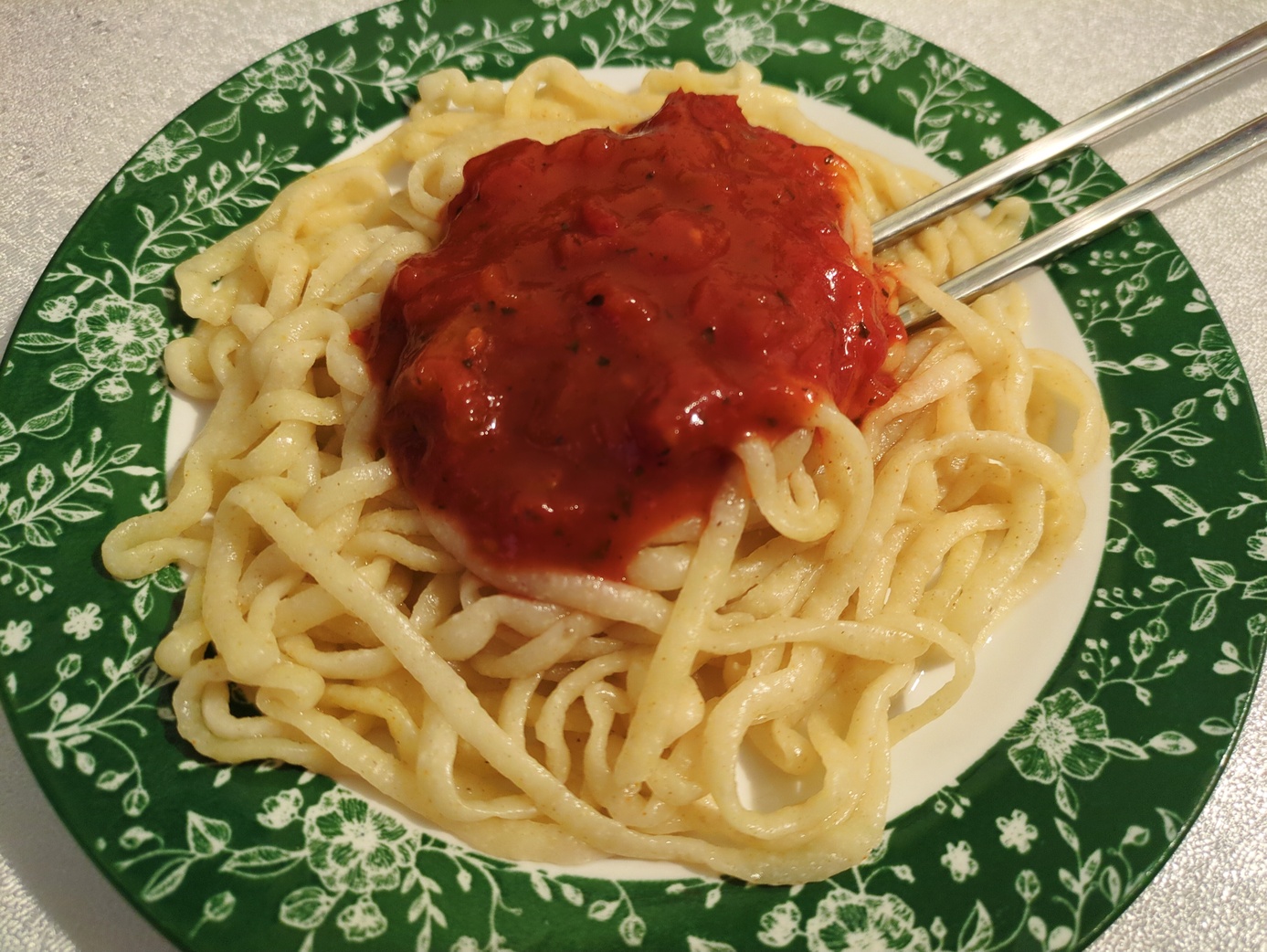
Macros and calories
Ingredients
You can even omit konjac gum from recipe, but this will change texture significantly and noodles will become much more jelly-like.
Steps
1. Mix all dry ingredients
Except for calcium lactate, it's for calcium bath.
2. Measure 1st portion of water
3. Add dry ingredients
While stirring, add dry ingredients. Large lumps are normal.
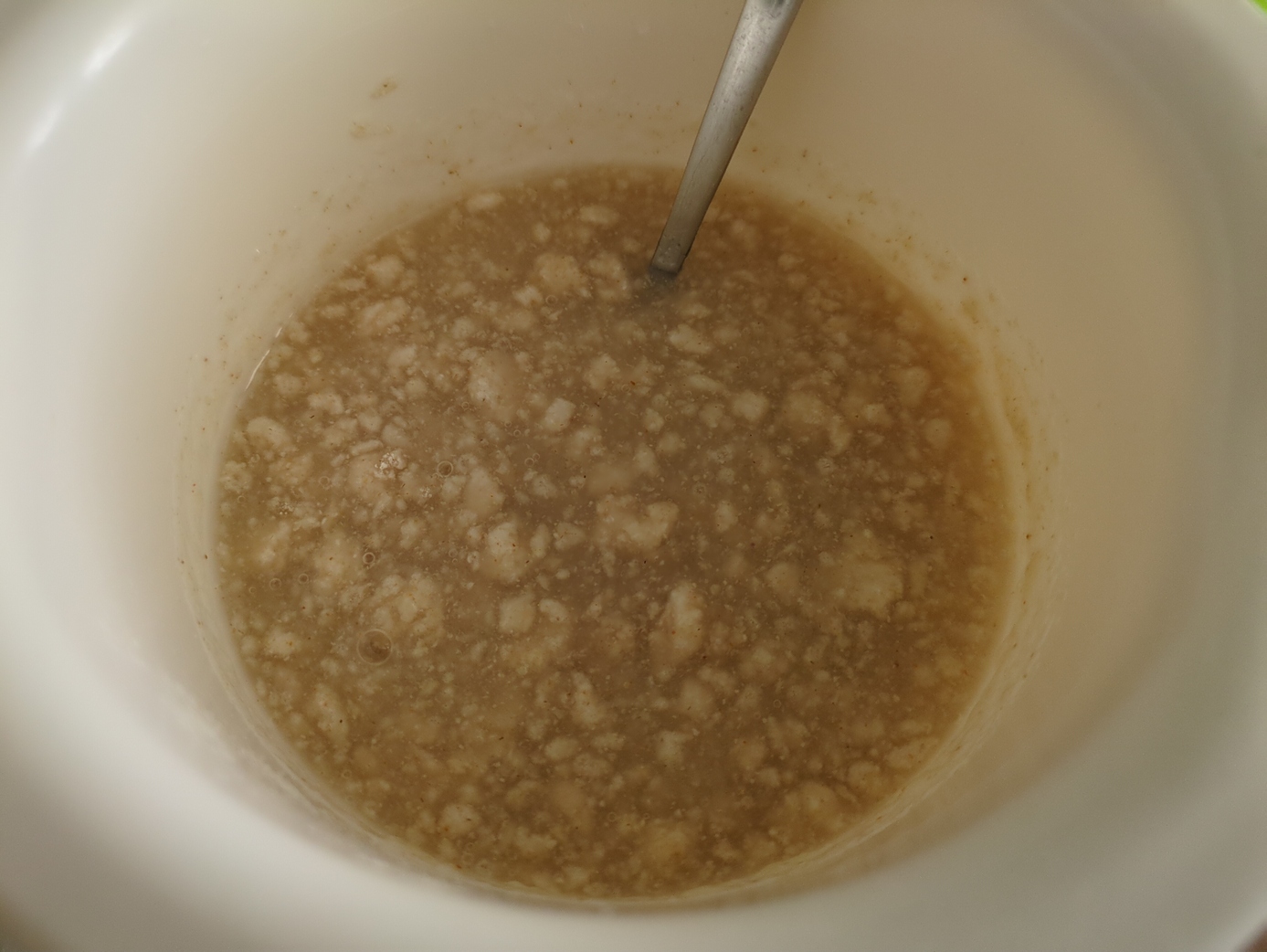
Then let the batter rest for a couple of minutes.
4. Blend thoroughly
Blend everything very thoroughly at max speed for 1–2 minutes until smooth.
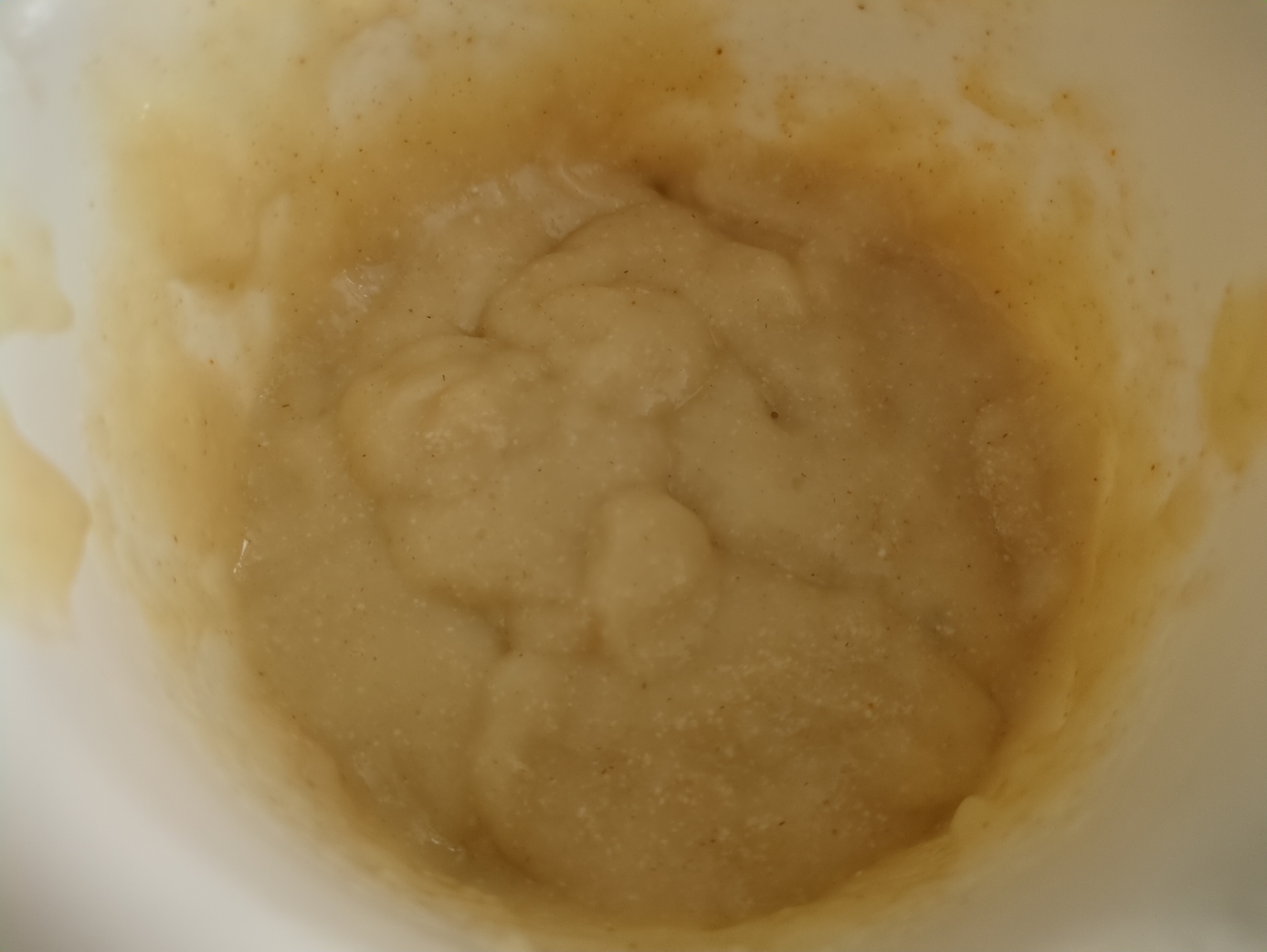
5. Meanwhile, prepare calcium bath
Pour slightly warm water (2nd portion) into wide enough container and add calcium lactate.
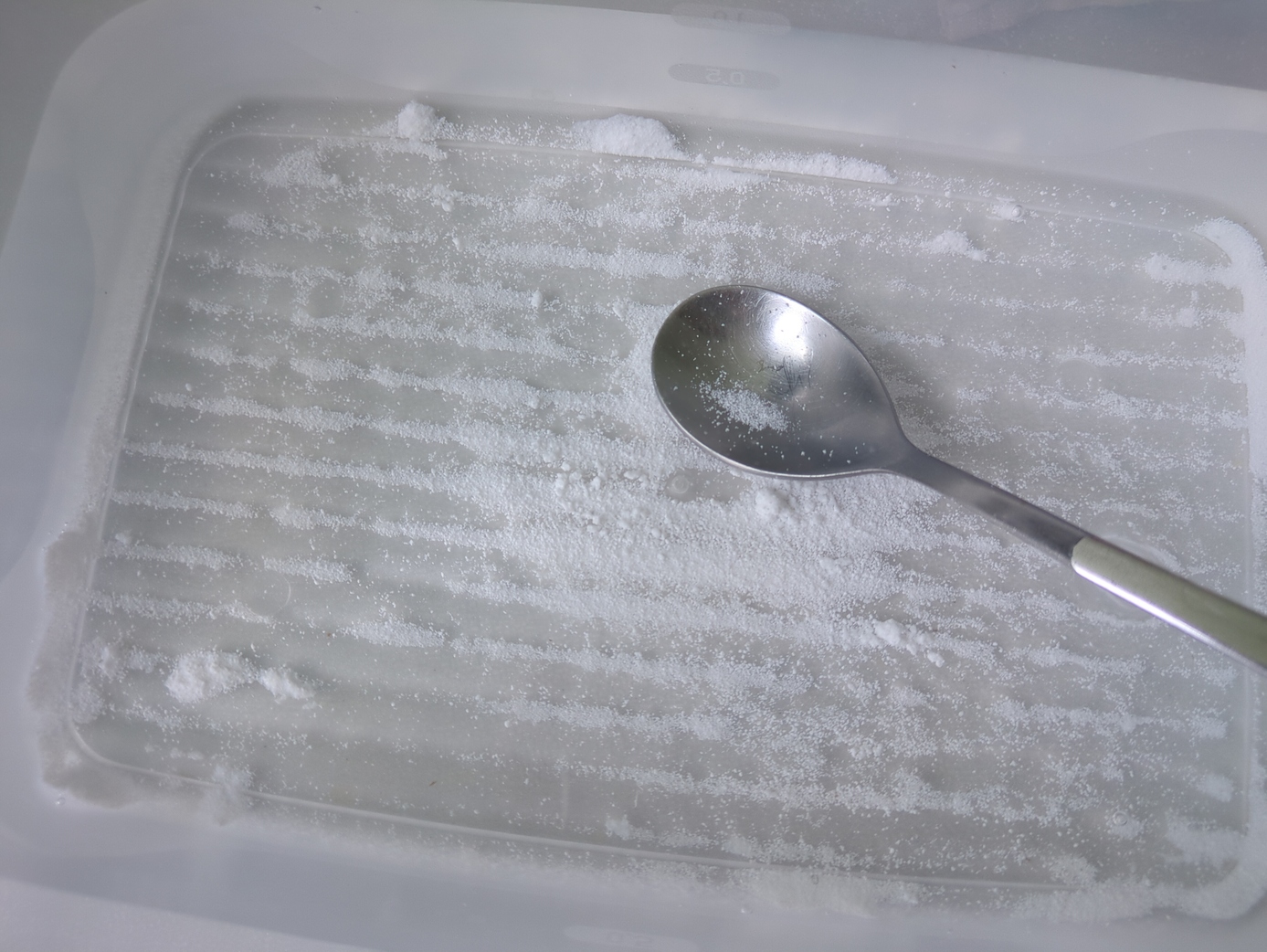
Then completely dissolve calcium lactate (not a single particle should remain).
6. Transfer base into piping bag / plastic bag
Shape of the noodles depends on nozzle. Try to use smallest possible opening (2–3 mm).
To make "linguine" shape, I heated and flattened plastic nozzle.
7. Pipe noodles into calcium bath
Try not to pipe into one spot. Spread noodles across container as much as possible. Noodles harden instantly and do not stick together.
Also, try not to dip tip of the nozzle into bath, otherwise batter inside will solidify.
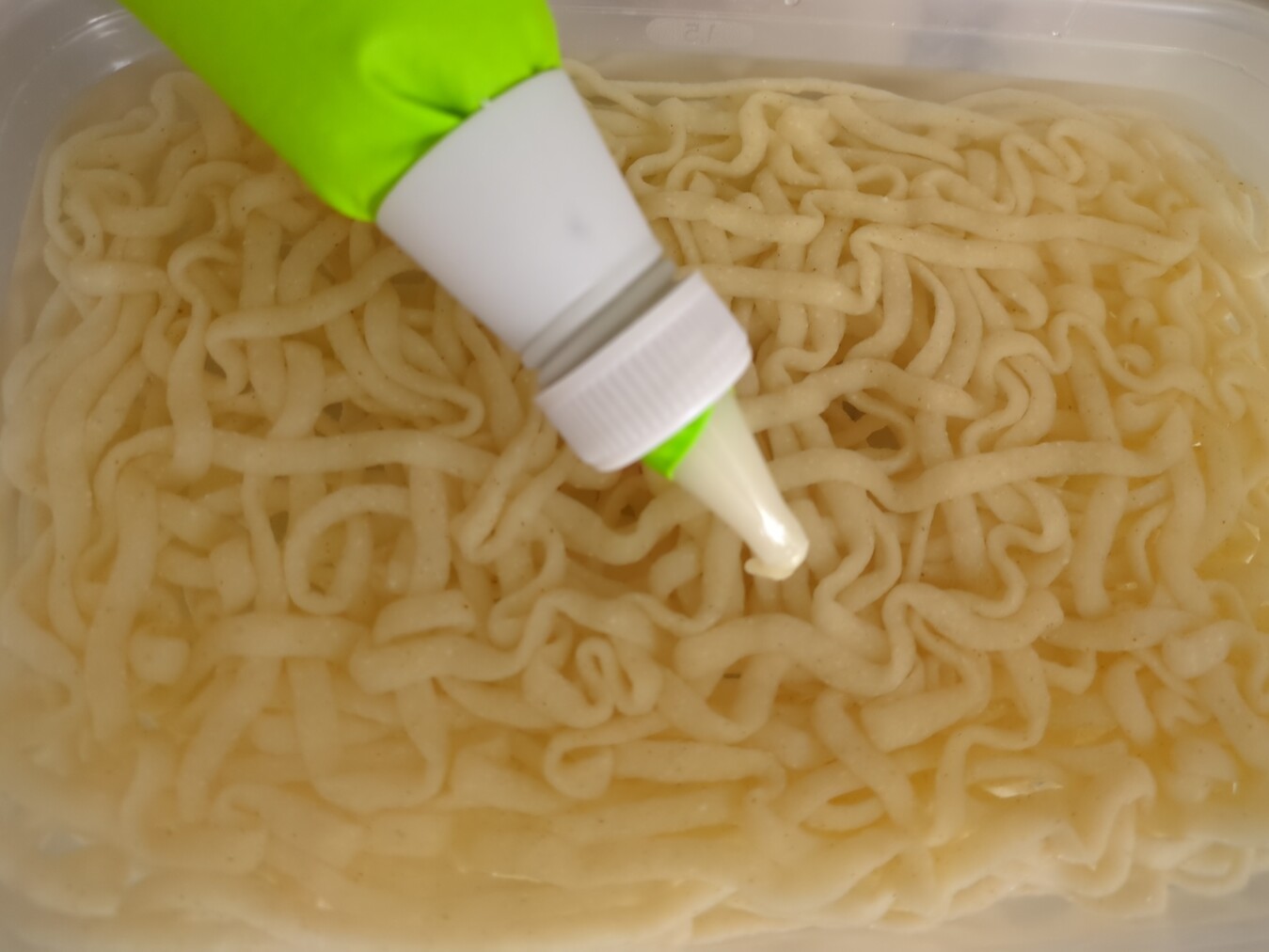
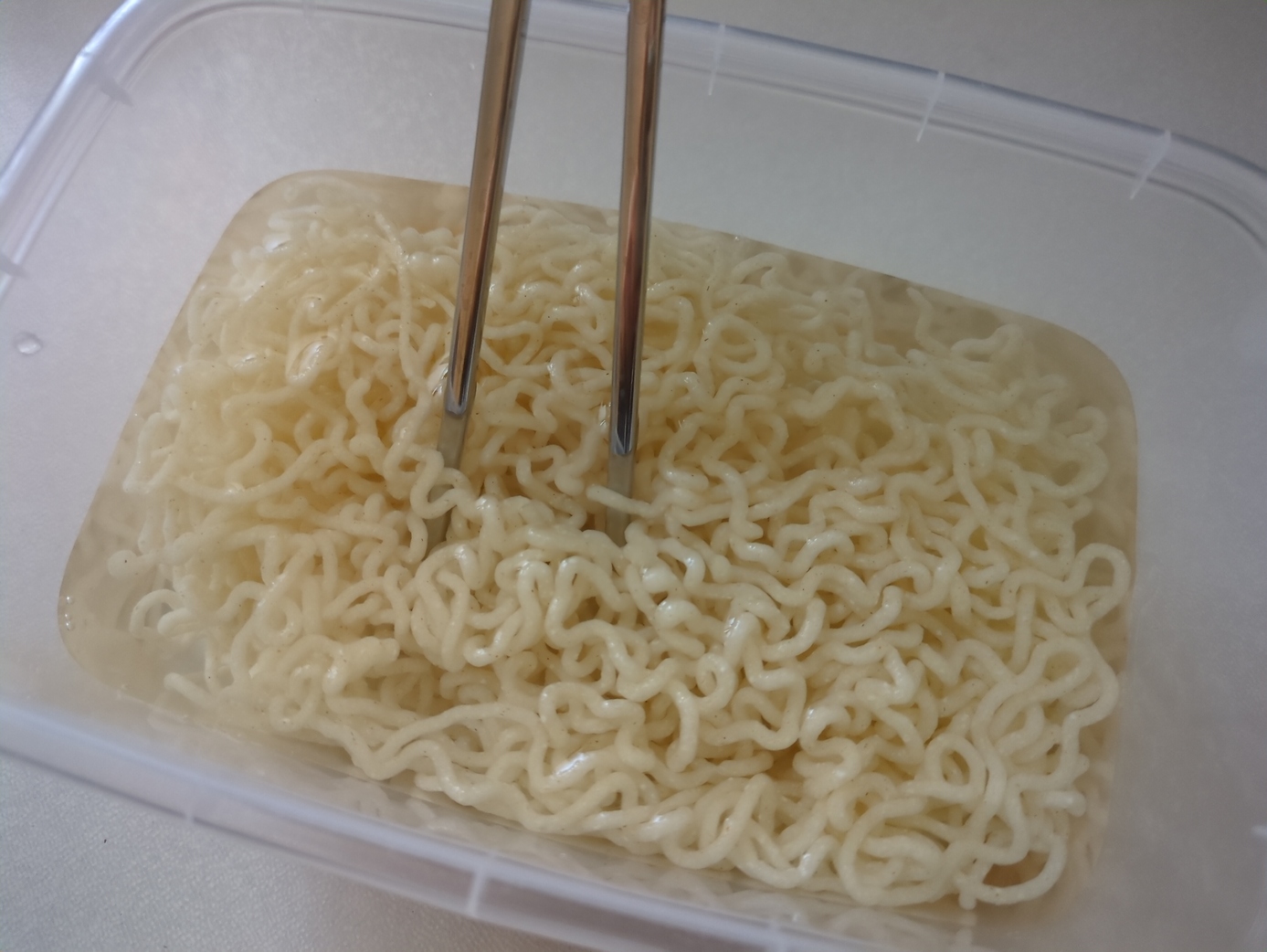
8. Leave in calcium bath for 10–15 minutes
Noodles continue to become firmer inside as calcium penetrates. This takes some time.
9. Drain and thoroughly rinse with water
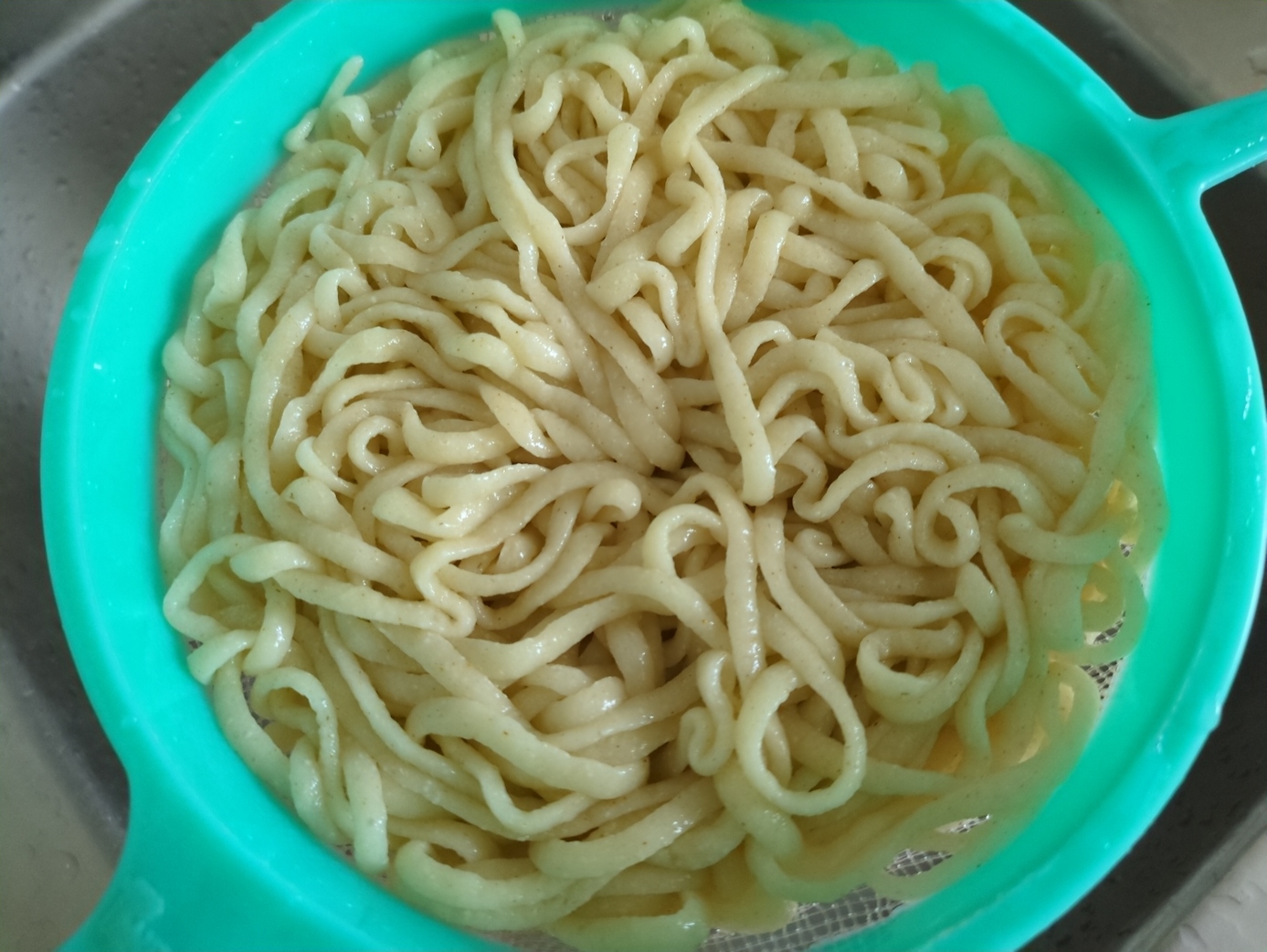
10. Eat or store in a fridge
Noodles taste best served hot with sauce, vegetables, or anything else you like.
For storage, dip noodles in water and keep in a fridge. They will probably last for 1–2 days.